Al Munadi Academy | Education & Skills for World Wide Students
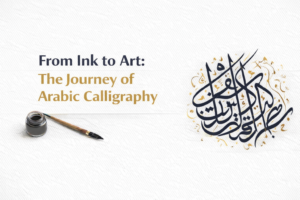
Every finished calligraphy artwork tells a story — not just through its words, but through the process behind it. What appears as a graceful composition on paper is actually the result of thought, intention, discipline, and countless careful strokes. The journey from a drop of ink to a complete piece of art is both creative and deeply reflective.
The Beginning: Intention and Inspiration
Paragraph:
Every calligraphy piece starts with an idea. It could be a meaningful word, a Qur’anic verse, or a short phrase that carries emotional or spiritual depth.
Before the pen touches the paper, the calligrapher sets an intention — not just to create something beautiful, but to express meaning through form. Inspiration may come from nature, emotions, or the desire to convey a message that resonates with the heart.
Choosing the Script
The next step is selecting the appropriate script. Each script has its own personality and purpose:
- Thuluth for elegance and grandeur
- Naskh for clarity and readability
- Diwani for flow and decorative beauty
- Square Kufic for geometric precision and architectural symmetry
The choice of script shapes how the message will be visually experienced.
Preparing the Tools
The qalam must be cut at the right angle, ensuring that each stroke has precision and character. Ink consistency matters, and the paper must be smooth enough to allow effortless movement.
This preparation itself requires patience and attention — setting the tone for the work ahead.
The First Draft: Structure and Balance
Before creating the final piece, calligraphers often sketch a rough layout. This stage focuses on:
- Letter proportions
- Spacing between words
- Overall composition
Mistakes are common here, and that is part of the process. Adjustments are made repeatedly until the composition feels balanced and harmonious.The Writing Process: Where Art Comes Alive
This is the most crucial stage — where ink meets paper.
Each stroke demands control, focus, and consistency. The pressure of the hand, the angle of the pen, and the flow of movement must all align perfectly.
There is no rush. Calligraphy teaches you to slow down, to be present in every moment. A single misplaced stroke can change the entire piece, which is why every line is drawn with care and awareness.
Refinement and Detailing
Once the main writing is complete, the artwork enters the refinement stage. Here, the calligrapher:
Corrects minor imperfectionsEnhances certain strokesAdds decorative elements if needed
This stage transforms a good piece into a polished one, adding depth and visual appeal.
The Final Touch: From Writing to Art
At this point, the piece is no longer just writing — it becomes art.
Some artists add backgrounds, textures, or colors to enhance the composition. Others keep it minimal, allowing the beauty of the script to stand on its own.
The final result reflects not only skill but also the time, patience, and emotion invested in the process.
A Journey of Growth
Every calligraphy piece is part of a larger journey. With each artwork, the calligrapher learns something new — about technique, about patience, and about themselves.
What starts as simple practice gradually evolves into mastery, but the learning never truly ends.
The journey from ink to art is not just about creating something visually appealing. It is about discipline, intention, and connection.
Arabic calligraphy teaches us that true beauty is not rushed — it is carefully built, stroke by stroke. And in that process, the artist doesn’t just create art… they refine their own soul.
Expanding Your Skills: From Practice to Professional Level
As you progress in Arabic calligraphy, your focus gradually shifts from basic practice to refinement and specialization. At this stage, consistency becomes more important than speed, and attention to detail defines the quality of your work.
Advanced learners begin to explore complex compositions, experiment with different scripts, and develop a deeper understanding of visual balance. This phase also involves studying classical works of master calligraphers to gain insight into traditional techniques and artistic standards.
Over time, your strokes become more confident, your compositions more harmonious, and your personal style begins to emerge.
Common Mistakes to Avoid in Arabic Calligraphy
While learning Arabic calligraphy, certain mistakes can slow down progress if not addressed early:
- Inconsistent stroke thickness due to incorrect pen angle
- Poor letter proportions (Mīzān)
- Irregular spacing between letters and words
- Rushing through practice without proper control
- Using low-quality tools that affect precision
Identifying and correcting these mistakes early helps in building a strong foundation and achieving better results.
Importance of Consistency and Daily Practice
Arabic calligraphy is a skill that improves with regular practice. Even a short daily practice session can significantly enhance control, accuracy, and confidence.
Instead of focusing on quantity, it is more effective to practice with intention—paying close attention to each stroke, maintaining correct proportions, and refining technique gradually.
Consistency not only improves technical ability but also strengthens discipline, which is essential for mastering this art form.
How to Learn Arabic Calligraphy?
Learning Arabic calligraphy requires patience, consistency, and a disciplined approach to mastering both technique and artistic expression:
Practice basic strokes daily — Strong foundational lines build control and confidenceUse proper tools — Quality pens (Qalam), ink, and paper enhance precisionStudy proportions — Maintain correct letter ratios and spacing (Mīzān)Learn under a skilled instructor — Expert guidance refines technique and prevents errors
Exploring Creative Applications of Arabic Calligraphy
Arabic calligraphy is not limited to traditional writing; it has evolved into a versatile art form with various modern applications:
- Wall art and interior decoration
- Logo and brand identity design
- Islamic art and manuscript preservation
- Digital calligraphy and graphic design
- Personalized gifts and custom artwork
These applications open opportunities for both creative expression and professional growth.
Building a Career in Arabic Calligraphy
With the growing appreciation for Islamic art and handmade designs, Arabic calligraphy offers multiple career paths:
- Professional calligrapher (commission-based artwork)
- Calligraphy instructor or online tutor
- Graphic designer specializing in Arabic typography
- Content creator in the field of art and education
- Freelancer for custom design and branding projects
By combining traditional skills with modern tools, calligraphers can establish a strong presence both offline and online.
Why Structured Learning Matters
Self-practice is important, but structured learning accelerates progress. A well-designed course provides:
- Step-by-step guidance from basics to advanced levels
- Correction of mistakes in real time
- Exposure to multiple scripts and styles
- Personalized feedback for continuous improvement
- A disciplined learning path that ensures consistency
Learning under expert supervision helps avoid common errors and builds confidence more efficiently.
Join a Growing Community of Calligraphy Learners
Being part of a learning community enhances motivation and growth. Interacting with fellow students, sharing progress, and receiving feedback creates a supportive environment that encourages continuous improvement.
A strong community also exposes you to diverse styles, ideas, and creative approaches, helping you expand your artistic vision.
Learn Arabic Calligraphy with Al-Munādī Academy
Develop the art of beautiful writing from the comfort of your home with our structured Arabic Calligraphy courses. Designed for beginners to advanced learners, our programs focus on stroke mastery, script development, and artistic composition. With personalized guidance from experienced instructors, you will learn to write with precision, balance, and elegance while building your own unique calligraphic style.
Conclusion
Arabic calligraphy is a timeless art that beautifully blends discipline with creativity, offering a lifelong journey of growth and self-expression. Mastery is achieved through patience, consistent practice, and a deep appreciation for form, balance, and precision.
Each stroke contributes not only to artistic refinement but also to personal development, shaping focus, discipline, and attention to detail. By continuously improving your technique, understanding proportions, and practicing structured scripts, you move closer to true excellence.
Rather than perfection, it is this commitment to continuous improvement and connection to the art that defines mastery. May your journey be guided by creativity, patience, and dedication, leading you to create work that reflects both elegance and precision.